
On cultural memory, the grounded self, and why Nigeria needs its history back
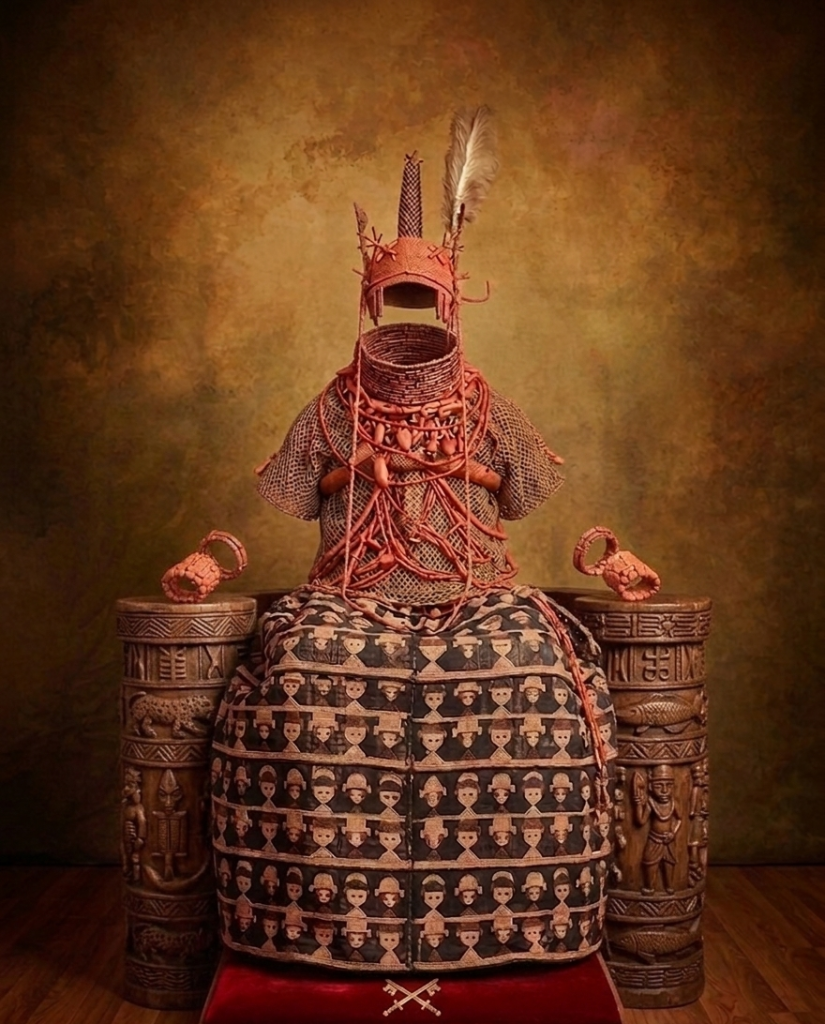
There is a particular quality to people who know where they come from. It is not nostalgia or performative pride. It is a groundedness that expresses itself as ease, as legibility across contexts, as an authority that requires no announcement. The cultured person, in whatever room, carries an orientation. They are not searching. They arrived already placed.
The Romans had a word for this: gravitas. Literally, weight. A density of personhood earned through formation — through knowing one’s position in a long story, and what that story demanded. Bourdieu, centuries later, tried to formalise what this looks like from the outside. He called it habitus: the internalised structure of a culture that becomes posture, instinct, reflex. The formed person does not perform their context. They emanate it. Move them into an unfamiliar room and they remain recognisable, because the foundation is stable. They travel freely precisely because they are not, beneath it all, lost.
— — —
The problem with a search conducted without a fixed starting point is that it has no reliable terminus. A person can wander with genuine sincerity and still end up far from anywhere that resembles home. The search requires a centre — a known self from which all outward movement departs. That centre is built, in every culture that has understood this, from the same materials: story, memory, origin, provenance. The foundational question of identity is not ‘who do I want to become’ but ‘from what, exactly, do I come.’ The second question makes the first answerable.
This is why the opening up of the world into a single undifferentiated context is experienced as disorientation before anything else. The individual gets recontextualised into an enormous frame, and the enormity is felt before it is named — low-grade anxiety, persistent restlessness, a sense of being perpetually slightly off-balance. The cause-to-effect gap is wide enough that most people never connect it. When people without intact cultural memory are gathered into that frame — which is increasingly just the description of contemporary urban life — relations almost always devolve into a cock fight.
— — —
The assault on African cultural memory was not incidental to colonisation. It was among its primary instruments. Oral traditions, rites of passage, regnal histories, cosmological frameworks — these were not collateral casualties. They were targets. Because the coloniser understood, even if not always consciously, what every serious power has understood: a people with intact cultural memory is genuinely difficult to fully subjugate. You cannot occupy a vessel that is already full.
What was left was the latent shape of something no longer fully accessible. The architecture of a self with the contents removed. People carrying the outline of a formation they cannot reconstruct, reaching toward a referent that has been blurred or erased — feeling the ache of something absent without always being able to name it. Phantom limb syndrome, at civilisational scale. The ache is real.
The ache is real. The reaching is real. The problem is that into a reaching that has no direction, any voice with sufficient volume can insert a destination. The louder voices — political, commercial, ideological — are not offering truth. and a person who does not know enough of their own difference is very susceptible to having that gap filled with whatever is convenient for someone else.
— — —
Nigeria is at a phase where this is not an abstraction. The cauldrons that are visibly boiling — ethnic tension, political manipulation, religious instrumentalisation, the peculiar cruelty of compatriots who cannot recognise each other as kin — are cooking on illusions made possible by gaps in cultural self-knowledge. Not ignorance in the simple sense. A more specific absence: people who do not know enough of their own particular story to locate themselves within the larger one, and so cannot distinguish between the voice that is orienting them and the voice that is exploiting them.
The work is not the recovery of a pristine past. That past is gone in its pristine form and reaching for it romantically produces a different kind of illusion. The work is the recovery of enough — enough story, enough provenance, enough specific knowledge of the particular cultures that shaped this particular geography — that people can stand somewhere real when the world asks them where they are from.
A person who can answer that question with weight is not easily displaced. They are not susceptible to substitutions. They know, at the level of felt formation rather than recited fact, what is theirs and what is not. That knowledge is the foundation. Everything else — ambition, expression, navigation of the world in all its enormity — gets layered on top of it. Without the foundation, the layers have nothing to hold them. With it, they can stack up very high.
Have enough of these persons, and social infrastructure really becomes structural.