
Why Galleries Will Never Go Away
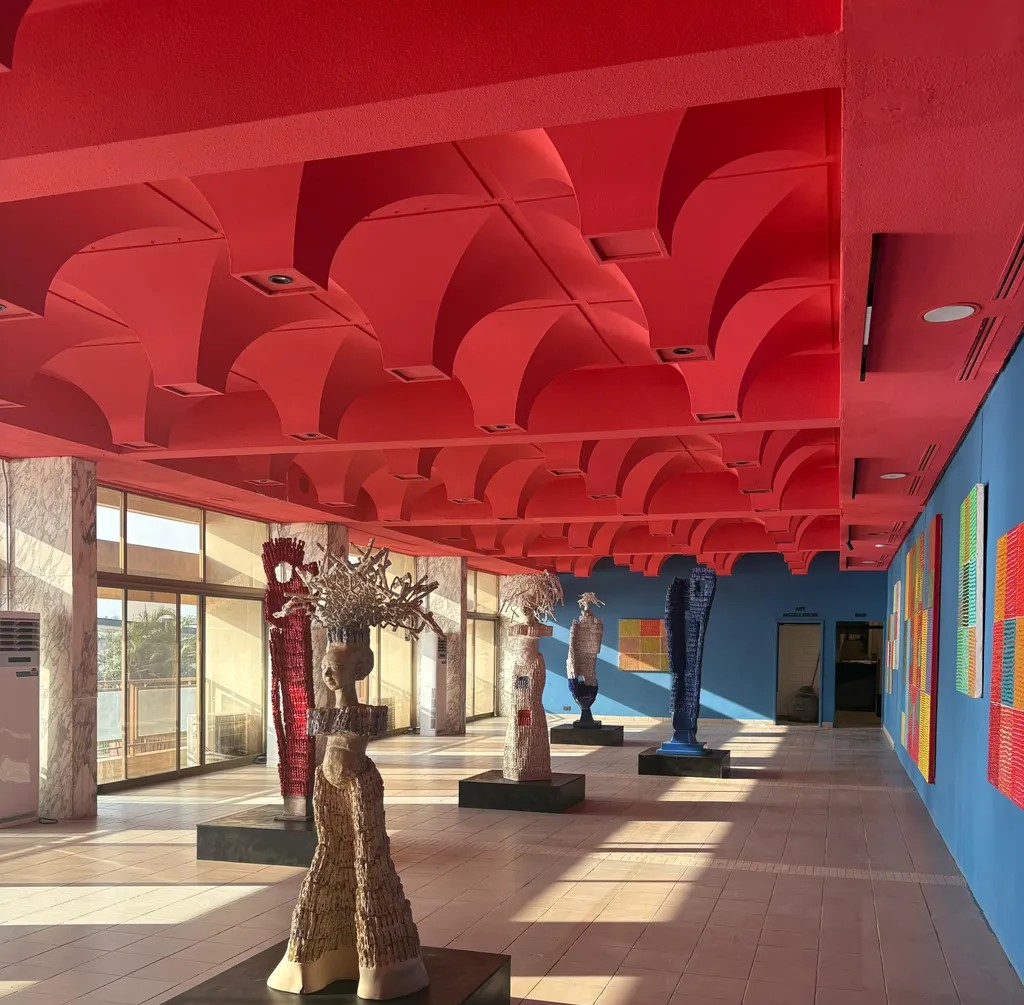
Space is one of the most fundamental components of art, though it is often treated as secondary to the work itself. We speak of medium, form, concept, technique, market value, provenance, and cultural relevance. Yet beneath all of these lies a quieter condition: art does not merely exist, it occurs. And one of the oldest conditions that allows it to occur fully is space.
This is why galleries will never truly go away.
Their forms may change. Their economics may shift. Their gatekeeping power may weaken, mutate, or reappear under new names. The white cube may lose some of its dominance. Art may continue to migrate across screens, fairs, private salons, pop-ups, public installations, immersive environments, and decentralized digital networks. But the underlying act of bringing people together to encounter art within a shared space will remain. That function is too fundamental to disappear.
Art is never just the object. It is also distance, scale, lighting, temperature, pacing, architecture, ambient sound, and the movement of bodies through a room. It is the pause before a work, the approach toward it, the turning away, the second look. It is the awareness that someone else is standing beside you, seeing differently. It is the subtle but powerful transformation that happens when a work is encountered not as isolated content, but as part of a spatial and social event.
A screen can deliver an image. It can distribute access with astonishing efficiency. It can democratize visibility, collapse geography, and multiply audiences far beyond the reach of any physical room. But it cannot fully reproduce the subsonic thrill of encounter. It cannot replicate scale in the bodily sense. It cannot substitute for the tension of presence. It cannot stage the choreography of attention in the same way that space can.
That difference matters because art is not only visual. It is spatial, social, and ceremonial. The gallery, at its best, is not a container for art but an instrument that activates it. It creates the conditions under which attention becomes deeper, slower, and more charged. It frames not only the work, but the viewer. In doing so, it turns looking into an event. This is part of why even people who first discover artworks online still seek them out in person. They are not simply looking for a higher-resolution version of the image. They are looking for the full experience of relation: between body and object, object and architecture, architecture and crowd, crowd and mood.
In that sense, galleries preserve context as much as they preserve art. They gather works into temporary constellations of meaning. They allow proximity and comparison. They produce atmospheres in which interpretation becomes collective, even when it feels private. A gallery visit is rarely solitary, even when one stands alone. The room is thick with other presences: curatorial intent, institutional history, market signals, social codes, whispered judgments, accidental reactions, and the psychological weather of the day. All of these shape the artwork without touching it. This is not a flaw in the gallery model. It is the point. Art has always needed more than creation. It needs reception. It needs ritual. It needs situations in which meaning can thicken. Space is one of the primary ways this happens. To place art somewhere is already to say something about it. To gather people around it is to extend that meaning further. The gallery is simply one of the clearest cultural technologies ever developed for doing exactly that.
This is also why the future of galleries is not tied to a single architectural or commercial format. Galleries do not survive because they are white walls in wealthy neighborhoods. They survive because they answer a human need: the need to encounter meaning together. That need can take many forms. It can live in storefronts, warehouses, homes, museums, churches, digital-physical hybrids, artist-run spaces, temporary pavilions, and places not yet recognized as art spaces at all. The form is flexible because the function is durable.
What will likely disappear are weaker versions of the gallery: spaces that mistake exclusivity for relevance, neutrality for seriousness, or market performance for cultural necessity. Those deserve pressure. Some deserve extinction. But the spatial gathering of art and audience will persist because it addresses something older than the contemporary art world. It addresses the human impulse to make experience communal, embodied, and memorable.
To stand before art in a space with others is to participate in a small social ritual. It is one of the ways the thread of life that runs through all art is woven and rewoven. The work leaves the artist, enters the room, and becomes part of a living exchange. This exchange cannot be fully digitized because it is not reducible to information. It includes timing, atmosphere, presence, and the strange electricity of shared attention.
Galleries will never go away for the same reason theaters, temples, and public squares never entirely disappear. Human beings continue to need places where meaning is not just transmitted, but enacted.
And that, more than any business model or institutional legacy, is what gives the gallery its future.