
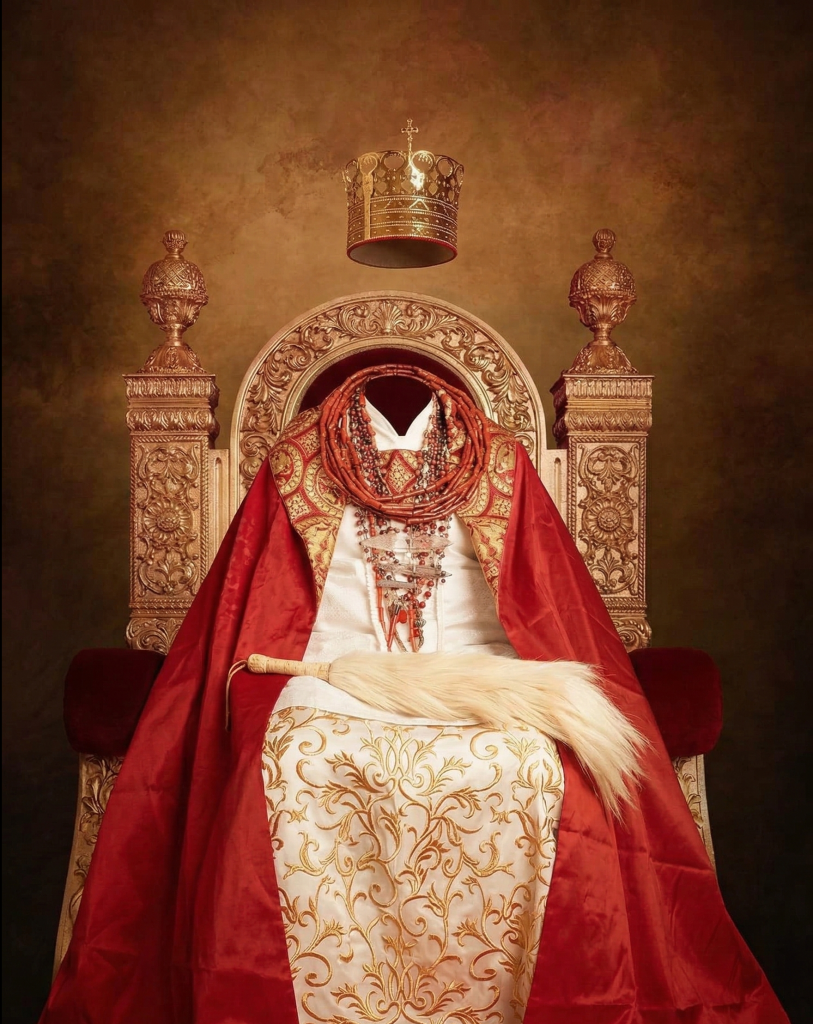
Almost every contemporary art practice today would describe their works as an exploration or investigation of memory and cultural identity. While this could simply be a herd response to an apparently trendy format, there’s also the possibility that there’s actually an overwhelming attempt by a lot of young Nigerian contemporary artists to translate heritage and culture into visual expressions. The latter perspective is what this edition will choose to focus on.
The burden of investigating culture and heritage is often to surface a connection to the beauty in who we are and where we come from but beyond the beauty, it is also to get familiar with the reality of those identities and origins. Culture isn’t distant or complicated. It’s alive and progressively forming around us. Seeing culture as the way people live, the customs they revere, defining it as the texture of a society becomes obvious and following that, art could be argued to be the fingerprint of culture. Art raises the ridges and grooves on an otherwise tactile surface that has been made plain from over-familiarity and thus presents the opportunity to feel and experience that texture again. This expands the definition of the artist to mean anyone who can step out of the frame from time to time and witness enough to see the culture weaving all around them, and then, capture that by whatever form of expression, in time, in such a way that the rest of the rest of the people can notice and engage around it. This is evident across music, fashion, design, art and every other field there is. Understanding culture enough to capture it and translate it through your medium of choice is what makes someone an artist.
But in the translation and transmission of these cultural motifs or subjects, there’s ever the present risk of surface interpretation in artistic translations. Even when unarticulated, the individual’s level or depth of relationship to the environment or culture being represented heavily influences how much meaning is carried over into the works. And as with most acts of creation, the first step is— or should be— witnessing. The depth of this observation and reflection to the various imprints of culture determines the fidelity of the capture whereas the personal and lived experiences of the artist could be seen as the ink coated on the print patterns to make the transfer into expression.
The particular perspective of the artist influences what they believe is worth holding on to and so there is an abundance to how many prints that can be created from the same cultural subject. Ten artists can have the same story to tell and all ten will be expressed differently because what each artist—not only sees—but comprehends is filtered through their particular experiences; hence have probably cultivated particular perspectives. This is not a conversation about artistic styles but what each creator reads as the essence of the reference they’re attempting to translate through expression.
The depth of the experience is how the artist’s feelings and affection for the subject is imbued into the work and transmitted to the audience. There’s a different quality to the work of an artist who has sat with their subject long enough. Their translations are often apt, layered and soulful— full of soul. A wonderful example is Damilola Opedun, who I’ve written about here. While it is a serious effort and still does not guarantee you financial success, the importance of this approach to witnessing and translating our past and present cultural heritage cannot be oversold. Every soulful creation will eventually find itself an audience and so the best bet still is not just to do, but to do it with soul.
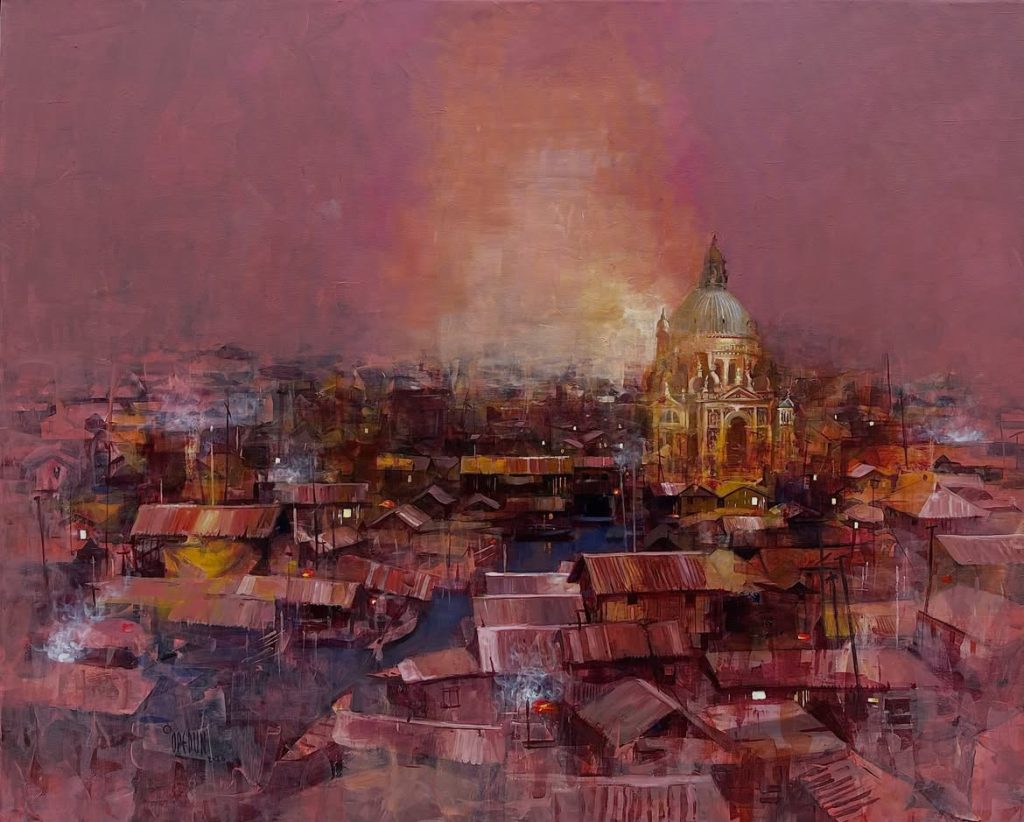
Beyond the conversation of the approach to witnessing is the one on the need for the witnessing. In the curatorial thesis for the Nigerian Royalty Series, I argued that the capture of these things is not an attempt at preserving a pristine picture of the past but a bid to capture just enough to highlight the relevance of that heritage while leaving space for them to inspire new ways of doing—or not doing— things. The necessity of this capture, however, cannot be overemphasised. This is why I’ve chosen to believe that there’s an overwhelming attempt by a lot of young Nigerian contemporary artists to translate heritage and culture into visual expressions. Because if that’s the case, then perhaps we may still have a chance at a renaissance— when we start knowing enough again to have gravitas; People that stand their ground because they know what it is made of; because they know what they’re made of.
The apathy of the Nigerian audience towards accepting and appreciating culturally rooted narratives even in the light of the apparent cultural revival happening is an indication of how much work is to be done; It’s seemingly easier to sell culturally inclined stories when they’re almost entirely removed from the original essence and applied as a sticker rather than the soul of the expression. With popular conditioning and leading narratives, it is as though there is a systemic design against the society’s consciousness of their heritage. However there’s no standing around pointing at straws while the work remains. This year, ATFA’s curatorial focus has been heavy on this thesis and have committed resources towards projects that properly investigate past heritage, presently forming cultures and all the imprints between.
The Nigerian Royalty series for instance is a collection of 12 interconnected paintings chronicling the lives and legacies of ancient royalty from Nigeria’s six geopolitical zones. Each painting tells a unique story while revealing clues and connections that demonstrate how these royal figures were serendipitously linked by the events of their time—forming a tapestry of Nigerian history that continues to influence our nation today. Over the last five months, we have supported Azeez Muritadoh with the research and resources to surface and translate these stories and the journey yet continues. In the time I’ve spent curating this project, I can definitely attest to the gravitas theory. There’s a tangible heft you begin to feel when you start knowing your place, your (his)story, your self; It’s like an empty vessel that gradually gets filled in. It’s unlikely to be kicked around or carried away by every passing breeze. That is the importance of this work— that we create captures in time and place for the people around us to pause, step out of the frame, albeit temporarily, and witness their world from outside the frame
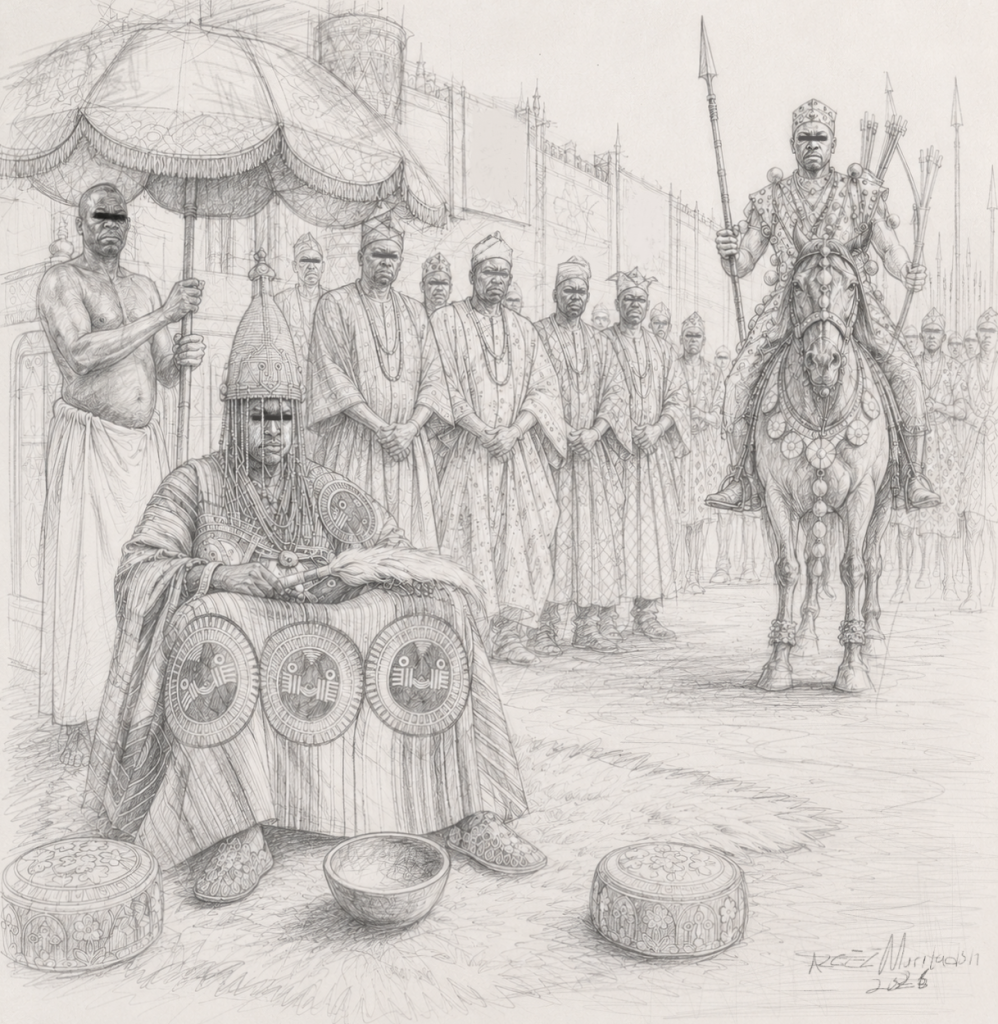
As much as we’re trying to translate historical provenance, we must not forget that the purpose of all these conversations is to refine the experience of now, with the past serving as marginal guides. We’re not merely celebrating. We are learning from these stories. For today as the world keeps circling back; for the future because the world will always circle back. From the Olu, we learn foresight from a monarch who understood that survival in a changing world required participation, literacy, and institutional adaptation. From the Ogiso, we learn from a divine ruler that creation requires both sound thought and physical labour, that sovereignty is not remote from the making of things but continuous with it. From the Are-ona-kakanfo, we get a cautionary tale from the questions his story raises. Was his ambition sovereignty or self-destruction? Was he a rebel, visionary, traitor, or pawn of forces he could not read?
Each of these stories selected from the six geo-political zones all present profound lessons that are increasingly more relevant in our current society. They make it clear that our history was never a static thing to be mourned or memorialised. It was, and still is, a working system of ideas: about power, participation, people and place that holds a people together. That is the renaissance I mean when I say renaissance. I mean a re-acquaintance obtained through the slow work of knowing enough about where we come from to stand differently in where we are.
What witnessing asks of the artist is not nostalgia, but literacy. Not preservation for its own sake, but translation with enough soul in it that someone, somewhere, steps out of the frame and recognises themselves in it. That is the work ATFA has committed to, and what we’re inviting sundry artists to commit to as well— because the alternative is a people who keep circling back to a past they never actually knew.